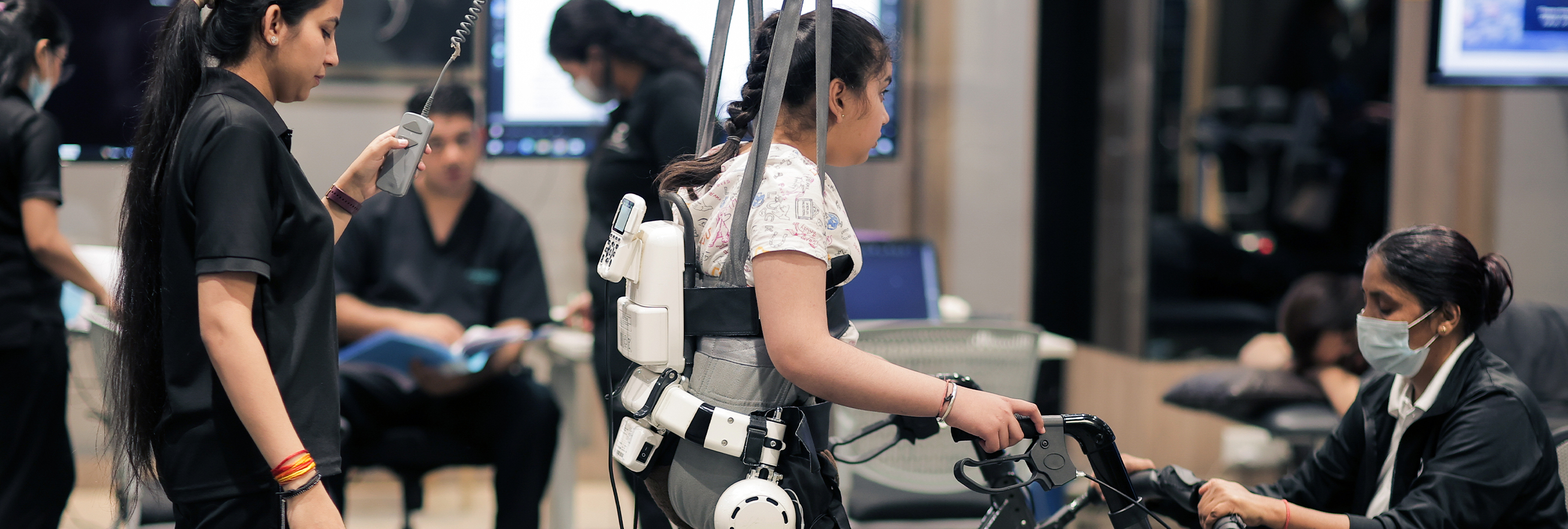
Key areas
Impact of Multiple Sclerosis
Multiple sclerosis (MS) affects the central nervous system, disrupting communication between the brain and body. Its impact varies widely, often leading to physical, cognitive, and sensory challenges over time.
Fatigue
A common and persistent tiredness that affects daily functioning.
Mobility Issues
Causes weakness, stiffness, and difficulty in walking or coordination.
Vision Problems
May lead to blurred or double vision and eye discomfort.
Cognitive Changes
Impacts memory, attention, and information processing.
Sensory Disturbances
Includes numbness, tingling, or altered sensations.
Balance & Coordination
Affects stability, increasing the risk of falls.
Technologies Used for Multiple sclerosis
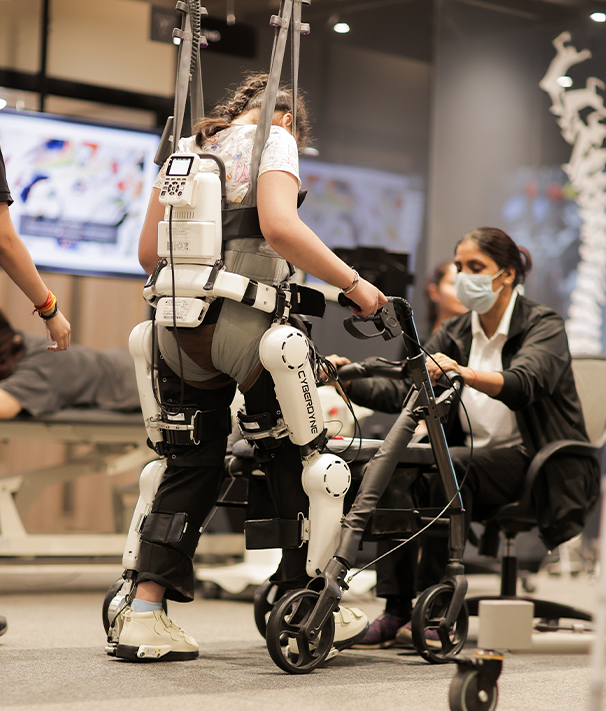
Cyberdyne HAL
Interprets weak bio-electrical signals to assist voluntary gait and lower-limb movement, reinforcing correct motor patterns and neuroplastic adaptation.
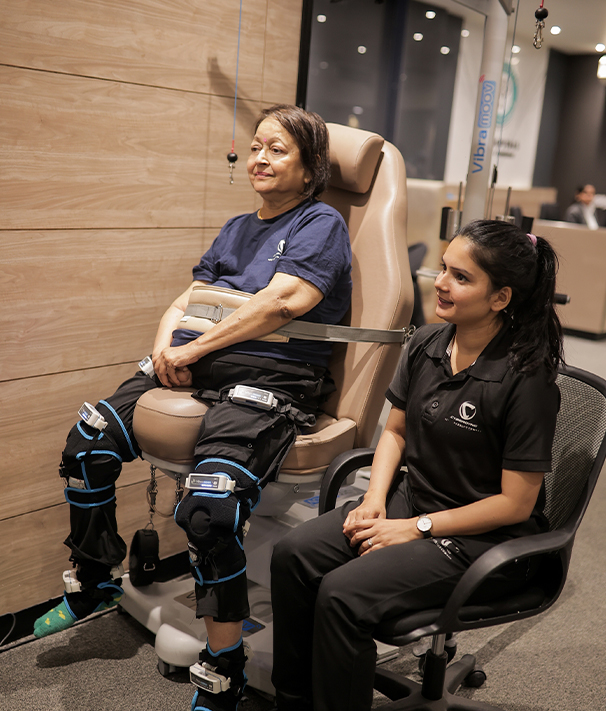
TYMO Balance System
A balance assessment and training platform providing real-time visual feedback to improve stability, posture, and cognitive-motor integration.
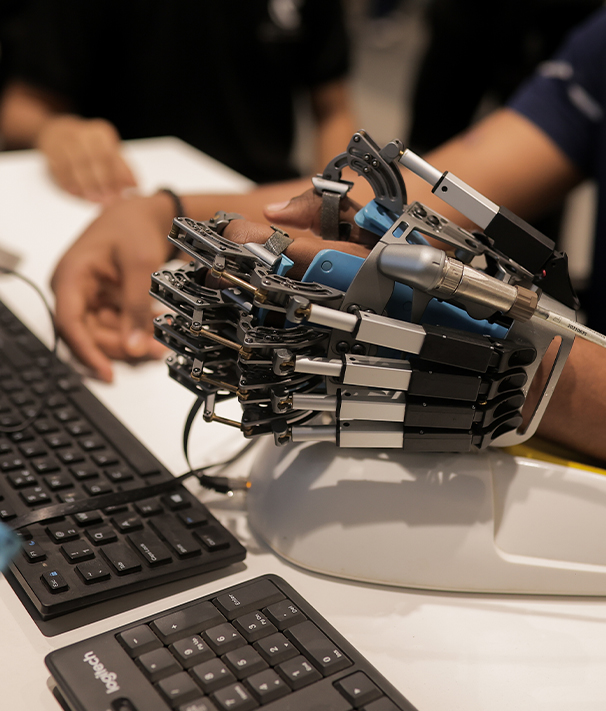
Hand of Hope
A task-oriented upper-limb system supporting reaching, grasping, and functional hand movements through repetitive assisted training.
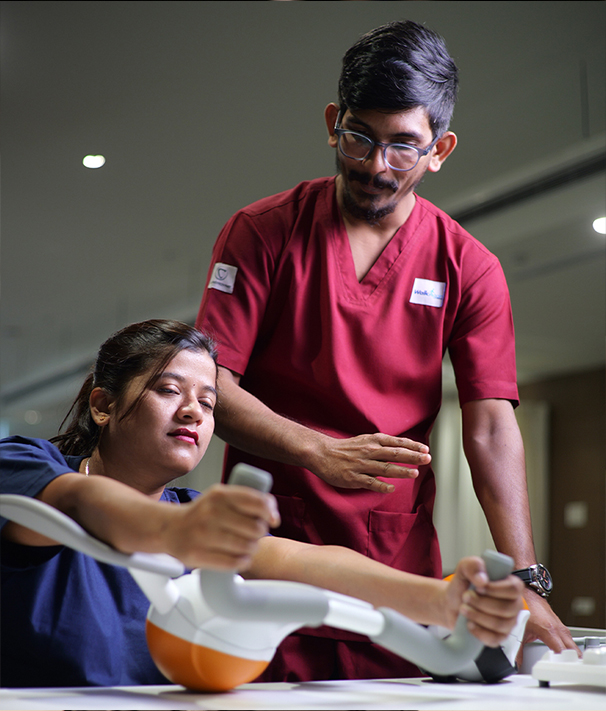
PABLO Rehabilitation System
An integrated assessment and therapy device targeting upper-limb function, trunk control, cognition, and gait with real-time performance tracking.
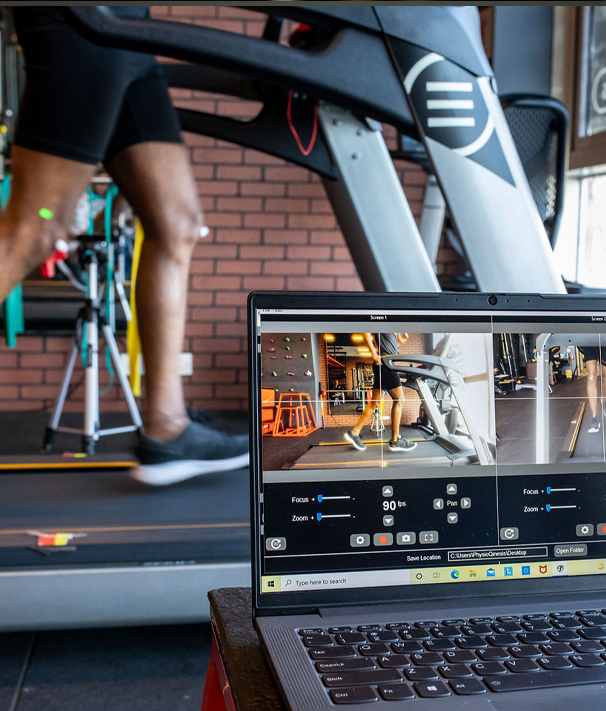
Gait LAB
A comprehensive gait analysis and training environment enabling data-driven adjustments to walking and balance therapy.
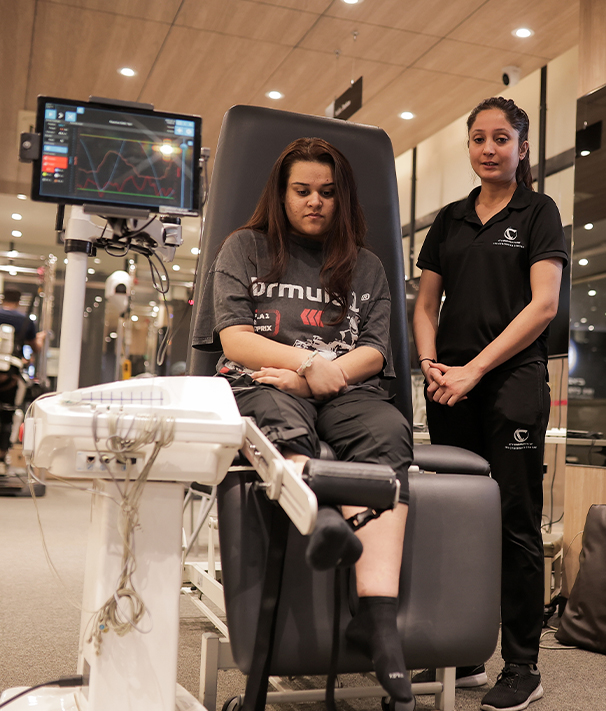
LUNA EMG Biofeedback System
Provides real-time muscle activation feedback using EMG signals to support strengthening, proprioception, and motor relearning.
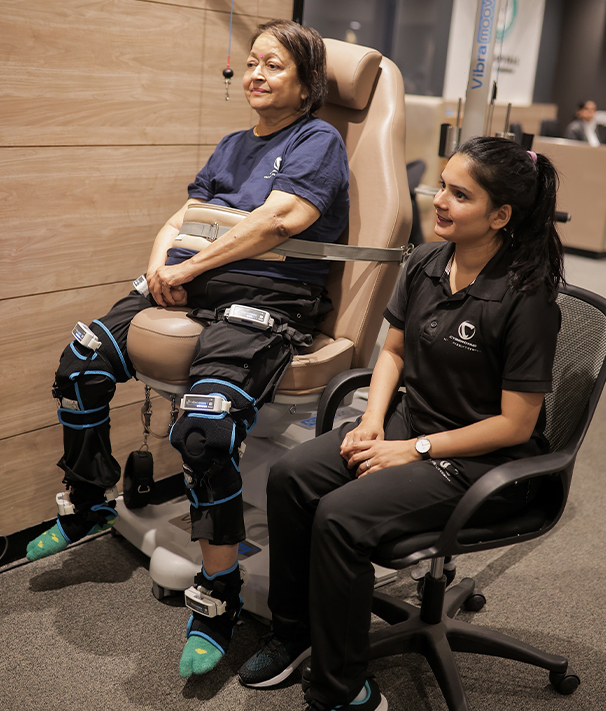
Vibramoov
A proprioceptive stimulation tool that supports early motor learning, balance training, and muscle tone regulation.
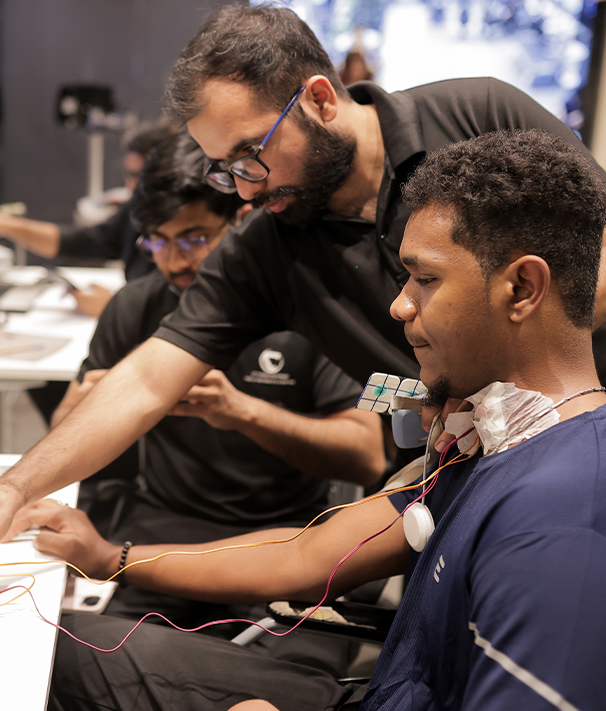
VitalStim Therapy
Electrical stimulation used in speech and swallowing rehabilitation to activate muscles involved in deglutition and coordination.
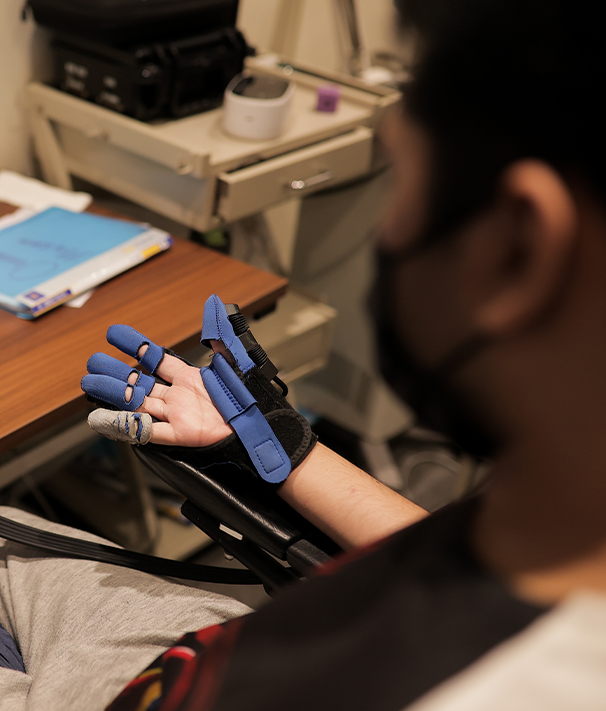
Syrebo Hand Therapy
A robotic hand rehabilitation system designed to improve dexterity and fine motor control through repetitive movement training.
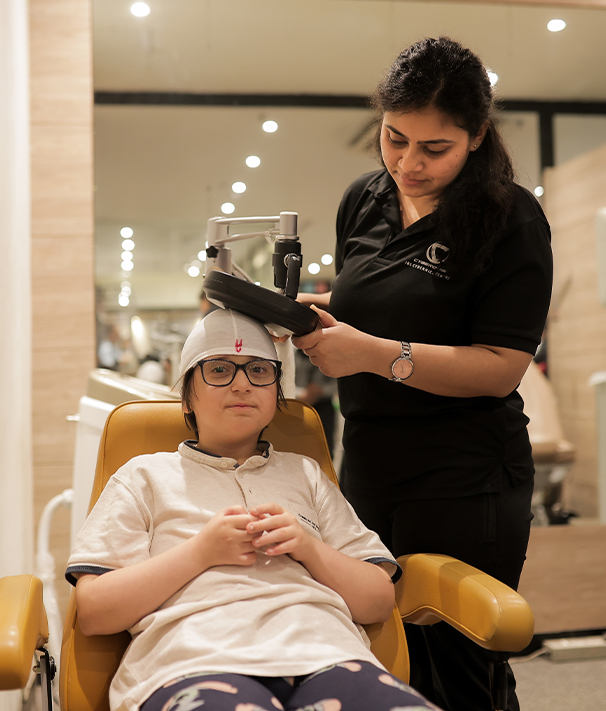
rTMS
Non-invasive brain stimulation that modulates cortical excitability, supporting neuroplasticity and motor and cognitive recovery.
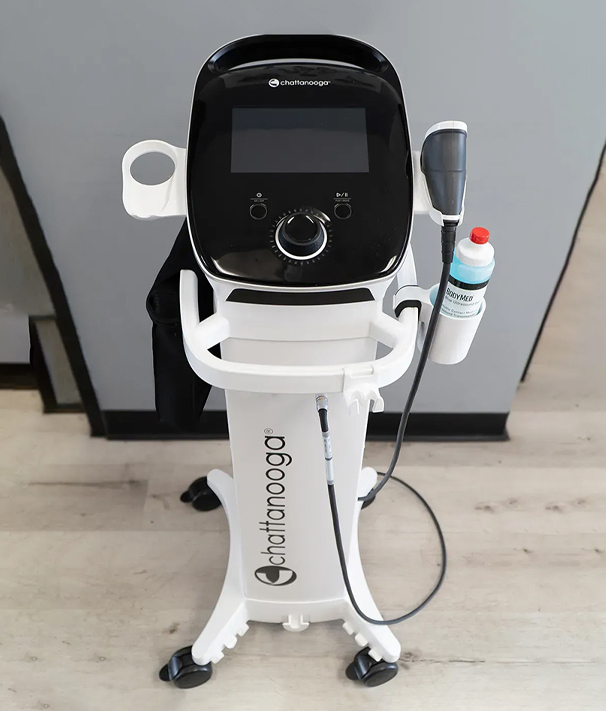
Chattanooga Electrical Stimulation
Neuromuscular electrical stimulation (NMES) for muscle strengthening, functional improvement, and pain modulation.
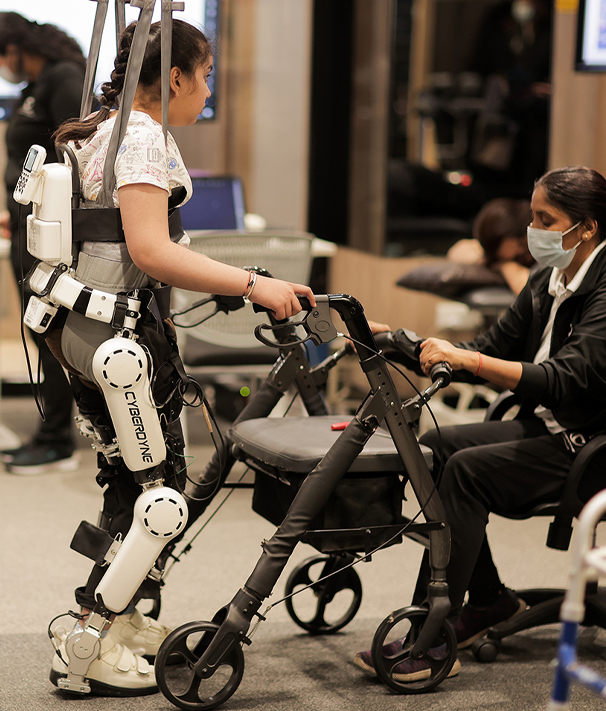
Cyber Trunk Rehabilitation System
A trunk-focused training system that improves core stability, sitting balance, and postural control.
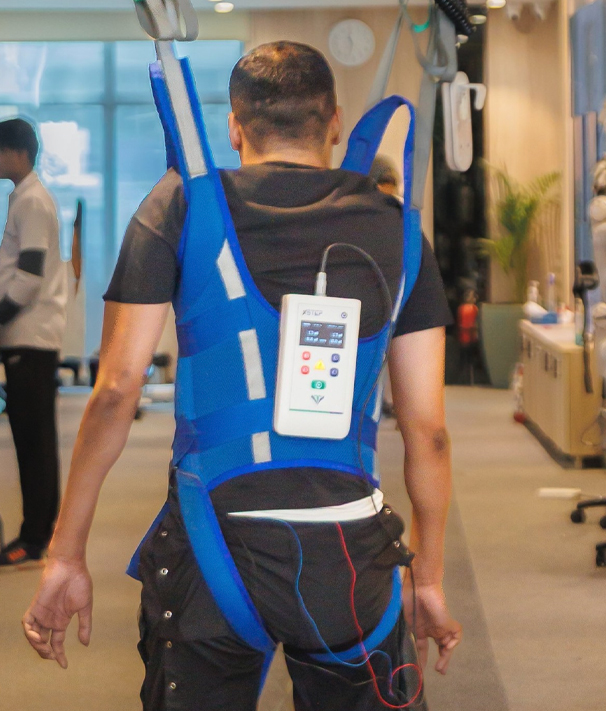
xStep Non-Invasive Spinal Stimulation
A non-invasive spinal stimulation technology designed to enhance brain–spinal cord communication and motor coordination.
Where Technology Meets Neuroscience Recovery in Multiple sclerosis Rehabilitation
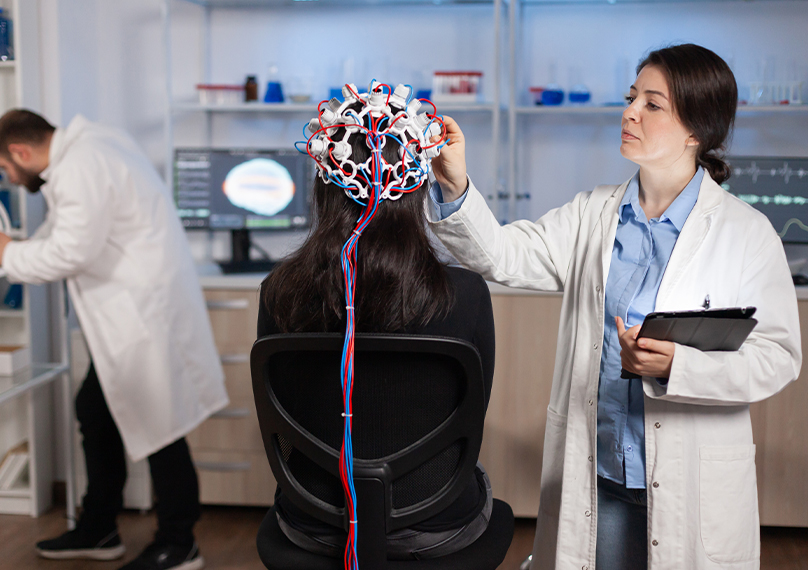 Step 1
Detection of Neural Signals
- Sensors capture bioelectric signals from the brain
- Identifies the patient’s intention to move
- Enables early engagement even with limited physical ability
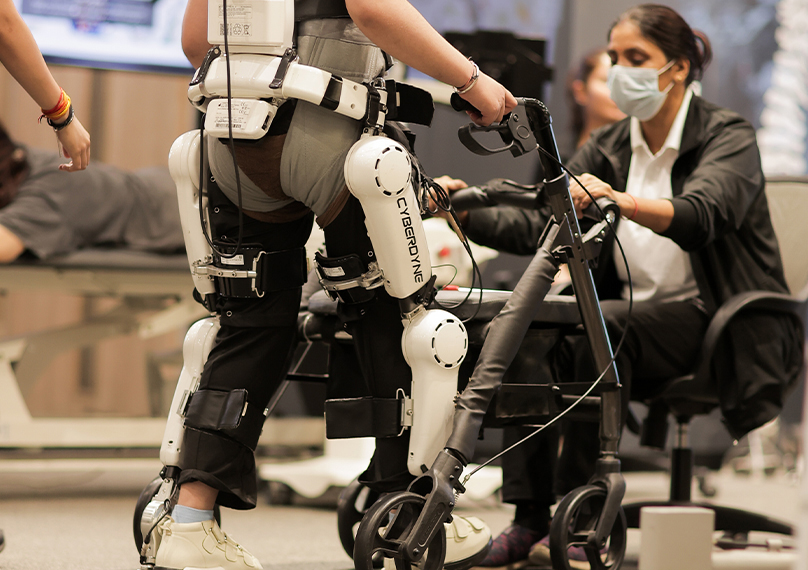 Step 2
Assisted Movement Execution
- Robotic systems support natural movement patterns
- Encourages correct posture and gait
- Reduces strain while maximizing repetition
 Step 3
Neuroplasticity Activation
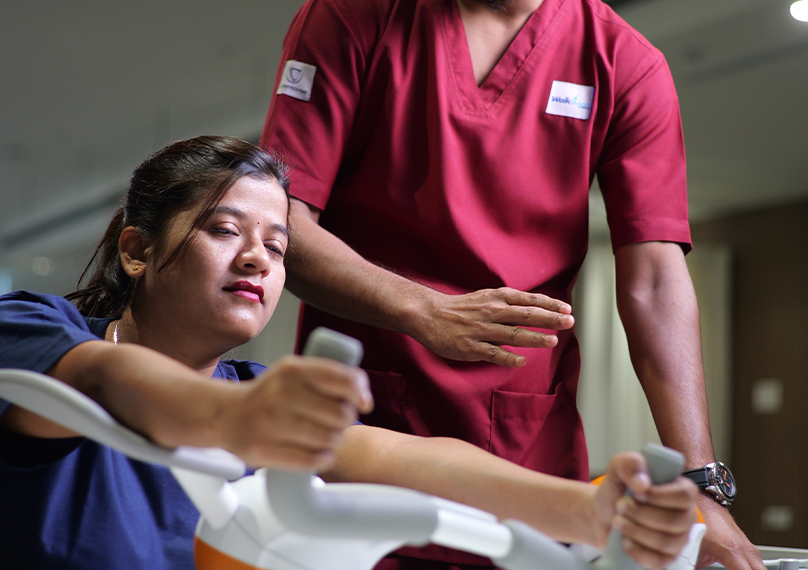
- Repetitive, guided movement stimulates brain rewiring
- Strengthens connections between neurons
- Promotes long-term functional recovery
 Step 4
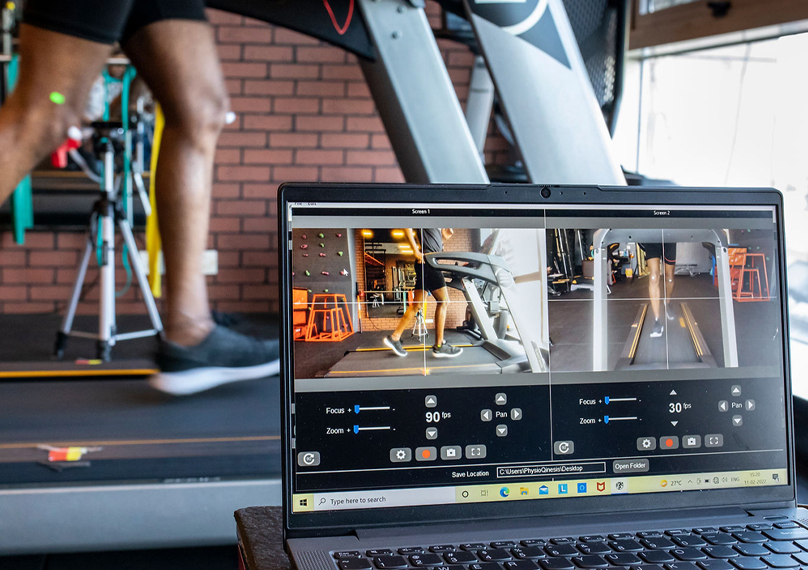
Real-Time Feedback & Progress Tracking
- Immediate feedback enhances motor learning
- Tracks improvements in strength, balance, and coordination
- Allows therapists to personalize treatment plans
Why WalkAgain
Conventional Neurorehab
- Restore lost physical function
- Manual repetition
- Therapist-driven
- Indirect
- Gradual, often plateauing

Walk Again Neurorehab
- Reactivate and retrain damaged neural circuits
- Brain–Computer Interface, robotics, FES
- Data-driven with real-time adjustments
- Direct and targeted stimulation
- Faster gains with sustained improvement
Patient Journey
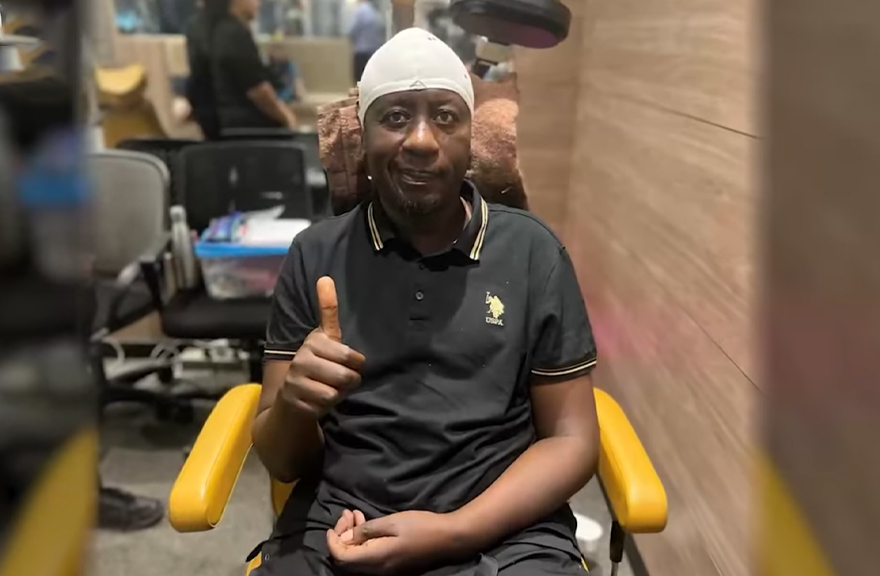
With consistent therapy sessions (45 minutes, 2–3 times per week), many patients experience:
 Stage 1
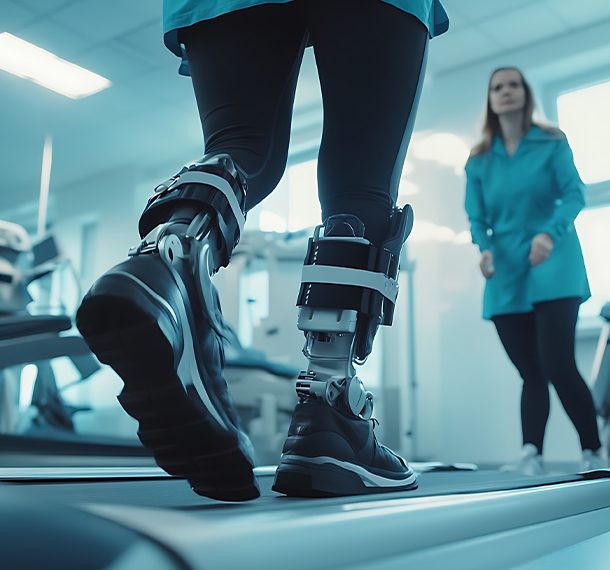
Improved gait and limb control
 Stage 2
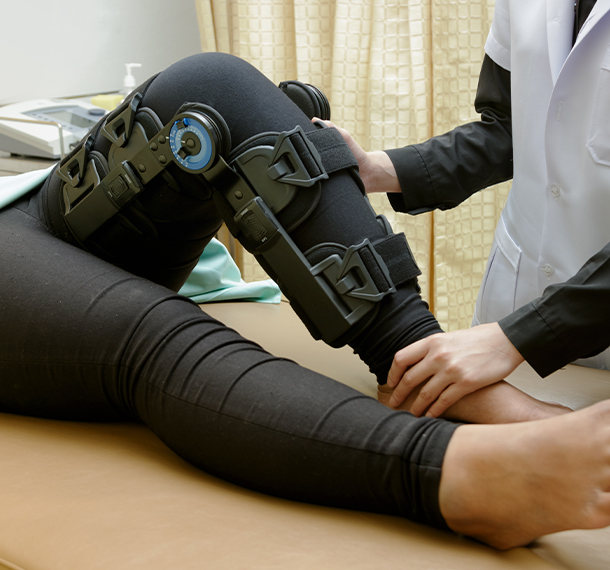
Reduced spasticity and muscle stiffness
 Stage 3
Better balance and coordination